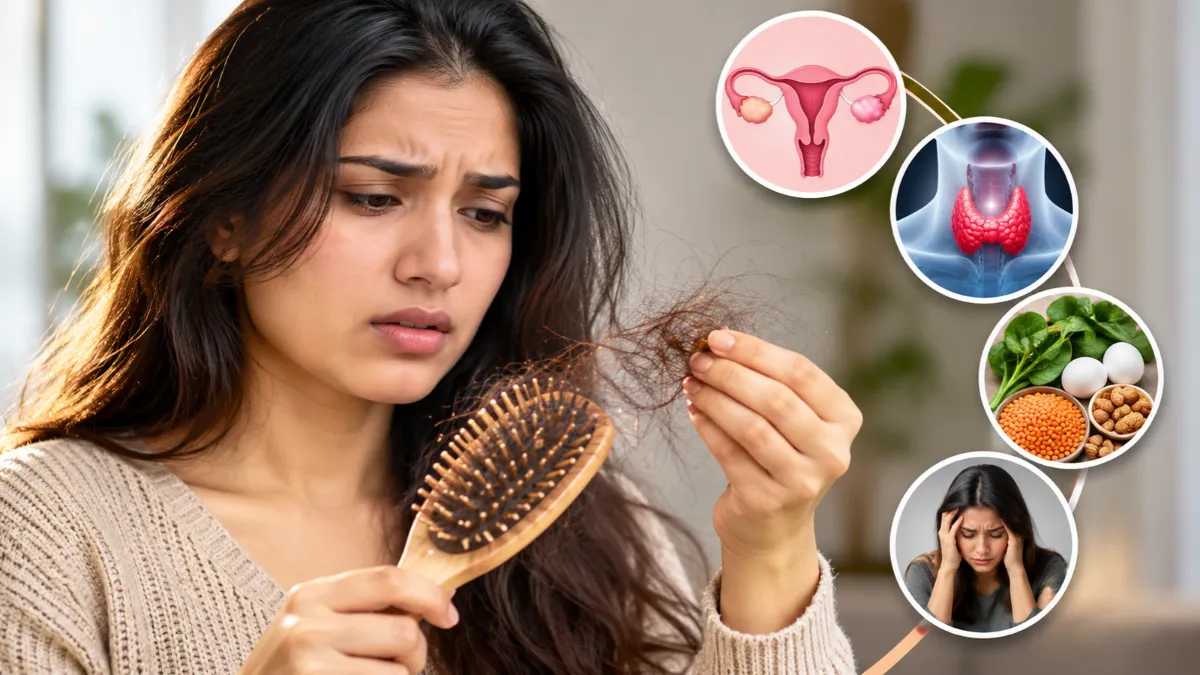
Are you experiencing excessive hair fall, thinning hair, a widening hair parting or reduced hair volume? Hair fall is one of the most common concerns among women. It can begin gradually or appear suddenly, leaving you wondering why your hair is falling so much and what you can do to stop it.
Many women search for questions such as Why am I losing so much hair? Can PCOS cause hair fall? Is hair fall related to thyroid problems? Which vitamin deficiency causes hair loss? Can hair fall be reversed?
The important thing to understand is that hair fall can have several underlying causes. Hormonal changes, nutritional deficiencies, stress, scalp conditions, genetics and certain health conditions can all affect the normal hair growth cycle.
As a homoeopathic physician, I believe that hair complaints deserve an individualised approach. At HOMOEOPATHY – By Dr. Divyanshi, the focus is on understanding the patient’s overall health, associated symptoms and possible contributing factors before planning care.
1. Why Is My Hair Falling So Much?
It is normal to lose some hair every day as part of the natural hair growth cycle. However, excessive shedding, visible thinning or a noticeable reduction in hair density may indicate an underlying problem.
Some common reasons for excessive hair fall include:
- Hormonal imbalance
- PCOS (Polycystic Ovary Syndrome)
- Thyroid disorders
- Iron deficiency and low ferritin
- Vitamin and nutritional deficiencies
- Stress, anxiety and inadequate sleep
- Recent fever, illness or surgery
- Pregnancy and postpartum hormonal changes
- Rapid weight loss or crash dieting
- Genetic or female pattern hair loss
- Dandruff and inflammatory scalp conditions
- Certain medications
Identifying the pattern, duration and possible trigger of hair fall is an important first step.
2. Can Hormonal Imbalance Cause Hair Fall in Women?
Yes. Hormonal changes can influence hair growth and shedding.
Women may experience hair-related concerns during:
- PCOS
- Pregnancy and after childbirth
- Perimenopause and menopause
- Thyroid disorders
- Other conditions affecting androgen or reproductive hormone levels
Hormonal hair loss may present as thinning over the crown, a widening central hair parting or reduced overall hair volume.
If hair fall is accompanied by irregular periods, acne, unwanted facial hair or unexplained weight changes, a medical assessment for hormonal conditions may be useful.
3. Does PCOS Cause Hair Fall?
PCOS is an important hormonal condition associated with hair concerns in women. Increased androgen activity in some women with PCOS can contribute to female pattern hair thinning.
Common symptoms associated with PCOS include:
- Irregular or missed periods
- Excessive facial hair
- Acne and oily skin
- Hair thinning, particularly around the crown
- Difficulty managing weight
- Insulin resistance in some women
If you have PCOS and are experiencing hair fall, it is important to consider your menstrual health, hormonal symptoms and overall metabolic health rather than treating hair fall as an isolated complaint.
4. Can Thyroid Problems Cause Hair Loss?
Yes. Both hypothyroidism (underactive thyroid) and hyperthyroidism (overactive thyroid) can affect the hair growth cycle.
Women with thyroid-related hair concerns may notice:
- Excessive hair shedding
- Diffuse thinning across the scalp
- Dry, brittle hair
- Changes in hair texture
- Reduced hair volume
Other symptoms, such as fatigue, unexplained weight changes, constipation, palpitations or sensitivity to cold or heat, may provide additional clues.
A thyroid profile, commonly including TSH and sometimes Free T4, may be recommended depending on the clinical assessment.
5. Which Vitamin Deficiency Causes Hair Fall?
Nutritional deficiencies can contribute to excessive hair shedding. Some of the important nutritional factors include:
Iron deficiency: Low iron stores, particularly low ferritin, may be associated with diffuse hair shedding.
Vitamin B12: Deficiency can affect general health and may contribute to hair concerns in some individuals.
Vitamin D: Low levels have been associated with certain hair-loss conditions.
Protein deficiency: Hair follicles require adequate protein for normal growth. Restrictive diets and inadequate protein intake can affect hair health.
Zinc deficiency: Zinc plays a role in normal tissue growth and repair, including hair follicle function.
However, taking supplements without knowing whether a deficiency exists is not always helpful. Nutritional assessment and appropriate testing can guide supplementation.
6. Can Stress Cause Hair Fall?
Yes. Physical and emotional stress can affect the hair growth cycle.
A condition called telogen effluvium may develop after a significant trigger, such as:
- Emotional stress or prolonged anxiety
- High fever or severe infection
- Surgery or hospitalisation
- Childbirth
- Rapid weight loss
- Major dietary changes
In telogen effluvium, increased hair shedding often becomes noticeable around two to three months after the triggering event.
This explains why some women notice excessive hair fall even after the original stressful event has passed.
7. Why Does Hair Fall Increase After Pregnancy?
Postpartum hair fall is common. During pregnancy, hormonal changes can keep more hair follicles in the growing phase. After delivery, hormonal levels change and a larger number of hairs may enter the shedding phase.
Women may notice:
- Increased hair fall while washing or combing
- Hair strands collecting on the pillow
- Reduced hair volume
- Diffuse thinning around the scalp
Postpartum shedding often improves over time. However, persistent or severe hair loss deserves an assessment, particularly when accompanied by fatigue, nutritional concerns or symptoms of thyroid dysfunction.
8. Why Is My Hair Getting Thinner Even Though I Am Not Losing Much Hair?
Not all hair loss presents as excessive shedding.
Some women gradually notice:
- A wider central hair parting
- Reduced volume in a ponytail
- Thinning around the crown
- More visible scalp
- Hair that appears less dense than before
This pattern may be associated with female pattern hair loss, which can have a genetic and hormonal component.
Early assessment can help identify the pattern and guide appropriate care.
9. Can Dandruff Cause Hair Fall?
Dandruff and scalp inflammation can contribute to itching, irritation and hair-related complaints. Frequent scratching may also cause hair breakage.
Common scalp symptoms include:
- White or yellowish flakes
- Itching
- Oily or dry scalp
- Redness and irritation
- Scaling around the hairline
Persistent dandruff, severe itching, pain, crusting or inflammation should be assessed so that the underlying scalp condition can be identified.
10. What Tests Should I Get Done for Hair Fall?
There is no single test that is necessary for every person experiencing hair loss. The investigations depend on the patient’s age, symptoms, medical history and examination.
A doctor may consider:
| Investigation | Why it may be considered |
|---|---|
| CBC | To assess anaemia and general blood parameters |
| Serum ferritin and iron studies | To assess iron stores |
| TSH and Free T4 | To evaluate thyroid function |
| Vitamin B12 | If deficiency is suspected |
| Vitamin D | If clinically indicated |
| Hormonal evaluation | If symptoms suggest PCOS or androgen excess |
| Scalp examination | To identify the pattern and type of hair loss |
For example, a woman with irregular periods, acne and hair thinning may need a different evaluation from someone experiencing hair shedding after fever or childbirth.
11. Is Hair Fall Reversible?
Many forms of hair fall can improve when the underlying cause is identified and appropriately managed.
Hair fall associated with temporary stress, nutritional deficiencies, postpartum changes or certain illnesses may improve as the triggering factor is addressed.
The chances of improvement depend on the type of hair loss, its duration and the condition of the hair follicles.
This is why early evaluation is important, particularly if you notice progressive thinning, bald patches or a widening hair parting.
12. Is Homoeopathy a Good Option for Hair Fall Treatment?
Homoeopathy is a very good option for hair fall treatment. Hair complaints often occur alongside other health concerns, and an individualised approach can help address the patient’s overall health picture.
In my clinical practice, I do not look at hair fall as an isolated complaint. I take a detailed history to understand:
- When the hair fall started and how it has progressed
- Whether the problem is excessive shedding or gradual thinning
- Menstrual history and hormonal concerns
- History of PCOS or thyroid disorders
- Digestion, appetite and nutritional habits
- Sleep pattern and stress levels
- Previous illnesses and medications
- Scalp symptoms and family history of hair loss
Based on the individual case assessment, I provide a personalised homoeopathic treatment plan.
At HOMOEOPATHY – By Dr. Divyanshi, I deal with different hair-related complaints, including:
- Excessive hair fall in women
- Hair thinning and reduced hair density
- Hair fall associated with PCOS
- Hair complaints associated with thyroid imbalance
- Stress-related hair shedding
- Recurrent hair fall
- Changes in hair texture and volume
My approach is to understand the individual patient, assess associated health concerns and guide them towards appropriate care. Investigations and specialist consultation are recommended whenever required.
13. How Can I Stop Hair Fall Naturally?
Along with appropriate medical care, certain daily habits can support healthy hair:
- Eat adequate protein: Include pulses, dal, paneer, milk, nuts and other suitable protein sources in your diet.
- Maintain a balanced diet: Avoid restrictive diets and crash weight-loss programmes.
- Correct nutritional deficiencies: Take supplements when indicated by your health assessment.
- Manage stress: Maintain a regular sleep routine and make time for relaxation.
- Avoid excessive heat styling: Frequent straightening, curling and harsh chemical treatments can damage hair.
- Avoid tight hairstyles: Repeated pulling and tension can contribute to traction-related hair loss.
- Maintain scalp hygiene: Choose suitable hair-care products and address persistent dandruff or scalp irritation.
- Be consistent: Hair growth is a gradual process, so patience and regular follow-up are important.
14. When Should You Consult a Doctor for Hair Fall?
You should seek medical advice if you experience:
- Sudden or excessive hair shedding
- Visible bald patches
- Gradually widening hair parting
- Hair fall with irregular menstrual cycles
- Hair thinning with symptoms of PCOS or thyroid problems
- Persistent dandruff, itching or scalp inflammation
- Loss of eyebrows or eyelashes
- Hair loss associated with unexplained weight changes or fatigue
Early assessment can help identify the cause and guide the right treatment approach.
Frequently Asked Questions About Hair Fall
Q1. What is the most common cause of hair fall in women?
Common causes include telogen effluvium, female pattern hair loss, hormonal changes, nutritional deficiencies, thyroid disorders and scalp conditions. The cause varies from person to person.
Q2. Can PCOS cause excessive hair fall?
Yes. Increased androgen activity associated with PCOS can contribute to hair thinning, particularly around the crown and central scalp.
Q3. Can thyroid imbalance cause hair thinning?
Yes. Both hypothyroidism and hyperthyroidism can affect the normal hair growth cycle and contribute to hair shedding.
Q4. Does low ferritin cause hair fall?
Low iron stores may be associated with diffuse hair shedding. Ferritin and other iron studies may be recommended when iron deficiency is suspected.
Q5. Why does hair fall increase during winter?
Hair concerns can fluctuate with seasonal changes, scalp dryness and changes in hair-care routines. However, persistent or significant shedding should not automatically be attributed to the weather.
Q6. Can hair fall be reversed?
Some types of hair loss are reversible or improve significantly when the underlying cause is managed. The outcome depends on the type and duration of hair loss.
Q7. Is homoeopathy good for hair fall?
Homoeopathy is a very good option to consider for hair fall treatment. A qualified homoeopathic physician can assess the patient’s individual history, associated complaints and overall health before planning personalised care.
Q8. Which doctor should I consult for excessive hair fall?
A dermatologist can assess the scalp and diagnose different types of hair loss. A qualified physician can also evaluate associated health concerns such as thyroid disorders, nutritional deficiencies and hormonal conditions.
Q9. Can hair fall happen due to stress?
Yes. Significant physical or emotional stress can trigger telogen effluvium, a form of temporary diffuse hair shedding.
Q10. How long does it take for hair to grow back after hair fall?
Hair recovery depends on the cause. In temporary shedding conditions, improvement may take several months because hair follicles follow a natural growth cycle.
Consult Dr. Divyanshi Lohni for Hair Fall and Hair-Related Complaints in Greater Noida West
If you are experiencing excessive hair fall, hair thinning, reduced hair volume or hair concerns associated with PCOS, thyroid disorders or hormonal changes, understanding the underlying factors is an important first step.
At HOMOEOPATHY – By Dr. Divyanshi, consultations focus on detailed case-taking and individualised homoeopathic care.
In-clinic and online consultations available.
Healthy hair begins with understanding your health, not simply changing your shampoo.